
Breaker Panel:
The Complete Florida Homeowner
Guide to Electrical Safety, GFCI Protection, and Long-Term Reliability
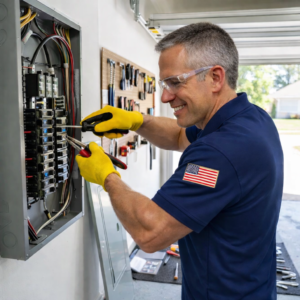
A breaker panel is the heart of every residential and commercial electrical system in Florida.
It distributes power safely, protects electrical wiring, and plays a critical role in preventing fires, electrical shocks, and costly system failures.
In South Florida—especially in Palm Beach, Broward, and Martin County—homes face unique electrical challenges.
High humidity, salt air, frequent storms, and heavy electrical loads from air conditioning systems make understanding your breaker panel essential for safety and long-term reliability.
What Is a Breaker Panel and Why It Matters
A breaker panel, also known as an electrical panel or load center, is where electricity enters the home and is distributed to individual circuits. Each circuit is protected by a circuit breaker designed to shut off power when unsafe conditions occur.
A properly designed breaker panel helps:
- Distribute electrical power safely throughout the home
- Protect wiring from overheating
- Reduce fire and shock hazards
- Support modern electrical demands
Standard Circuit Breakers: Basic Protection Explained
A standard circuit breaker is designed to protect electrical wiring from two main dangers: overloads and short circuits.
When too much current flows through a circuit, the breaker trips and shuts off power, preventing wires from overheating and reducing fire risk.
What Standard Breakers Do Not Protect Against
Standard breakers do not protect people from electrical shock caused by ground faults.
This is especially important in Florida, where moisture and electricity often coexist.
GFCI Protection and Why It Is Critical in Florida
A GFCI (Ground Fault Circuit Interrupter) continuously monitors the balance of electrical current between the hot and neutral wires. If it detects a small imbalance—often caused by electricity leaking through water or a person—it shuts off power instantly.
GFCI protection is especially important in Florida due to:
- High humidity and frequent rain
- Outdoor electrical equipment
- Pools, spas, and condensate pumps
- Garages, kitchens, bathrooms, and laundry areas
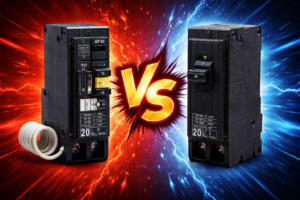
GFCI Breaker vs GFCI Receptacle
GFCI Receptacle
A GFCI receptacle is installed at the outlet and protects that outlet, along with any outlets downstream on the same circuit.
GFCI Breaker
A GFCI breaker is installed directly inside the breaker panel. It protects the entire circuit from the panel outward, including hidden wiring. In many Florida homes, GFCI breakers are preferred for circuits serving outdoor equipment, garages, air conditioning condensate pumps, and long wiring runs.
Why Breaker Panels Trip and What It Means
When a breaker trips repeatedly, it is rarely a coincidence.
Tripping is often a warning sign of an underlying electrical issue.
Common Causes of Breaker Trips
- Moisture intrusion
- Failing motors or condensate pumps
- Damaged or aging wiring insulation
- Overloaded circuits
- Improper grounding or shared neutrals
Ignoring repeated trips can lead to equipment damage, fire hazards, or loss of electrical protection when it is needed most.
Florida Electrical Code and Breaker Panel Requirements
Florida follows the National Electrical Code (NEC) with local amendments.
Modern breaker panels must meet updated safety standards, including GFCI and AFCI protection in specific areas.
Many older panels remain functional but no longer meet current safety expectations, especially when new electrical loads are added.
Breaker Panels and Air Conditioning Systems
Air conditioning systems are among the largest electrical loads in Florida homes.
Improper breaker sizing or missing protection can lead to nuisance trips, equipment damage, or unsafe operating conditions.
Electrical and HVAC planning should always work together.
Learn more about HVAC systems here:
Air Conditioning Services
When to Upgrade Your Breaker Panel
You should consider upgrading your breaker panel if:
- The panel is over 25–30 years old
- You experience frequent breaker trips
- You are adding new HVAC or electrical equipment
- There are signs of corrosion or overheating
Our Thoughts: Breaker Panel Safety in Florida Homes
A breaker panel is far more than a metal box—it is the backbone of electrical safety in your home. Understanding how breakers, GFCI protection, and panel design work together allows homeowners to make informed, safer decisions.
When installed and maintained correctly, your breaker panel protects your family, your home, and every system connected to it.
Schedule a professional inspection here:
https://ahub.us/contact/
Smart Homes, Smart Panels, and the Future
Modern breaker panels are evolving fast. Today’s panels can integrate advanced features that improve safety, reduce downtime, and give homeowners better visibility into energy usage.
Many modern breaker panels now support:
- Load monitoring
- Surge protection
- Smart diagnostics
- Remote alerts
As Florida homes become more energy-dependent, breaker panels are evolving from passive protection devices into intelligent control centers that support modern comfort systems, including HVAC and smart home automation.
Learn more:
- Electrical services:
https://ahub.us/electrical/ - Air conditioning systems:
https://ahub.us/air/ - System comparisons:
https://ahub.us/what-air-conditioning-unit-is-best/ - Schedule inspection:
https://ahub.us/contact/
Takeaways:
A breaker panel is not just a metal box—it is the backbone of electrical safety in Florida homes.
Understanding the difference between standard breakers, GFCI breakers, and GFCI receptacles allows homeowners to make smarter, safer decisions.
When designed and installed correctly, your breaker panel protects your family, your investment, and every system connected to it.