Electric Wire: The Backbone of Safe, Efficient Homes in Florida
Electric wire may be hidden behind walls and ceilings, but it is one of the most critical components of your home’s electrical system. From powering lighting and outlets to supporting high-demand systems like air conditioning, electric wire plays a direct role in safety, efficiency, and long-term reliability.
In Florida homes—especially in Palm Beach, Broward, and Martin County—proper electrical wiring is more important than many homeowners realize. High humidity, constant air conditioning use, modern appliances, and smart home technology all place increased demand on electrical systems. When electric wire is installed correctly, it protects your family, reduces energy waste, and prevents costly electrical failures.
What Is Electric Wire and Why It Matters
Electric wire is the system of insulated conductors that carries electricity from the breaker panel to outlets, switches, lighting fixtures, and appliances throughout a home. While it may look simple, electric wire must be carefully selected and installed to handle specific electrical loads safely.
The correct wire type, insulation, and gauge ensure that electricity flows efficiently without overheating, voltage drops, or safety hazards. Incorrect or outdated wiring increases the risk of electrical fires, nuisance breaker trips, equipment damage, and rising utility bills.
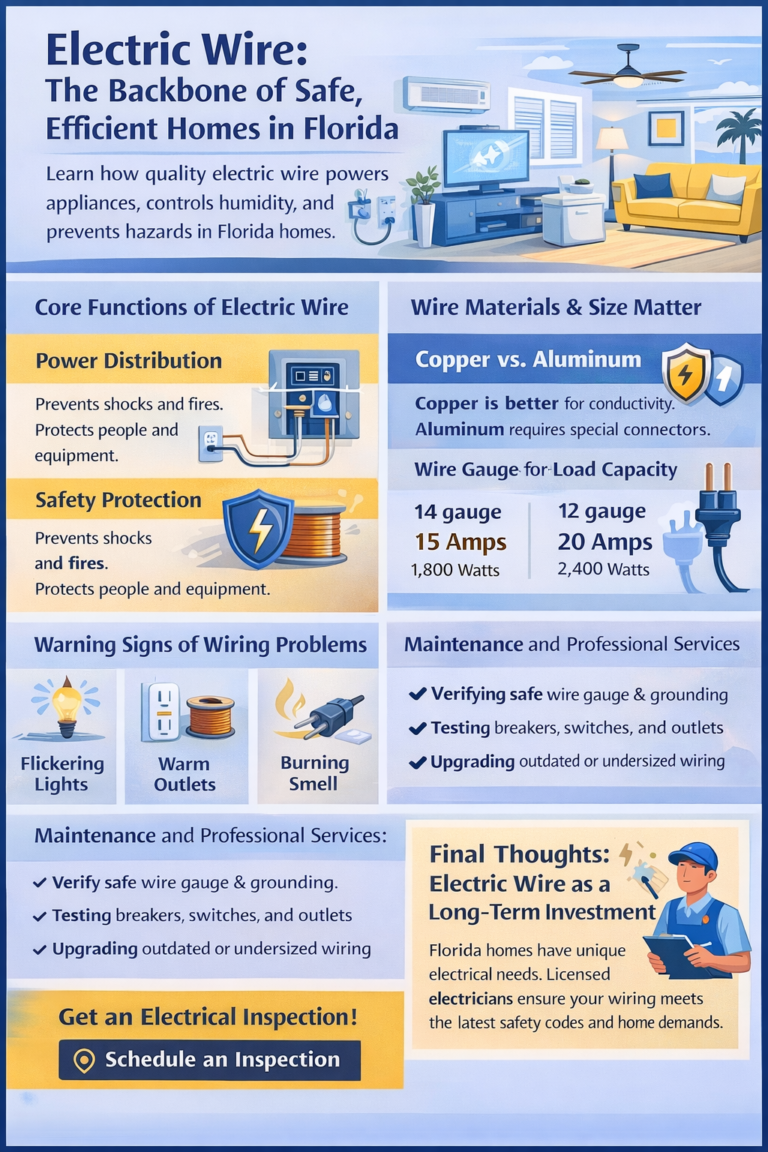
The Core Functions of Electric Wire
Power Distribution
Electric wire distributes power from the main electrical panel to every circuit in your home.
Properly sized wire minimizes resistance, allowing electricity to flow efficiently and consistently.
Undersized wiring increases resistance, leading to wasted energy and excessive heat buildup.
Safety Protection
One of the most important roles of electric wire is protecting people and property.
Poor wiring is a leading contributor to electrical fires and shock hazards.
Proper insulation, grounding conductors, and correct terminations help ensure that safety devices like breakers, GFCI, and AFCI protection work as intended.
System Reliability and Performance
Electric wire must deliver stable voltage and current to appliances and equipment.
Flickering lights, warm outlets, buzzing sounds, or frequent breaker trips are often early signs that wiring is overloaded, deteriorating, or improperly installed.
Wire Materials and Their Impact on Performance
Copper vs Aluminum Wiring
Most modern Florida homes use copper wiring due to its excellent conductivity, durability, and resistance to heat. Copper handles electrical loads efficiently and maintains tight connections over time.
Aluminum wiring, commonly found in older homes, expands and contracts more with temperature changes.
Without proper connectors and installation methods, aluminum wiring can loosen at connections, increasing fire risk. For this reason, copper is the preferred material for most residential circuits.
Wire Gauge and Load Capacity
Wire gauge refers to the thickness of the conductor. Thicker wire carries more current safely.
For example, 14-gauge wire is commonly used for 15-amp circuits, while 12-gauge wire supports 20-amp circuits.
Matching wire gauge to breaker size and electrical load is essential. Oversized breakers on undersized wire can cause overheating, while incorrect sizing leads to poor system performance and safety concerns.
Why Proper Electric Wire Matters in Florida Homes
Florida homes place unique demands on electrical systems. Continuous air conditioning use, pool equipment, electric water heaters, and increasing numbers of electronic devices all require wiring that can handle sustained loads.
High humidity and salt air (especially in coastal areas) can accelerate corrosion and degrade wiring connections over time. Quality materials and professional installation help prevent premature failures and costly repairs.
Common Warning Signs of Electrical Wiring Problems
Flickering or Dimming Lights
Lights that flicker or dim when appliances turn on may indicate loose connections, overloaded circuits, or undersized wiring.
Warm Outlets or Switches
Outlets or switches that feel warm to the touch are a serious warning sign.
Heat buildup often points to resistance in wiring connections and should be inspected immediately.
Burning Smells or Discoloration
Any burning odor, scorched outlets, or discoloration around electrical devices suggests overheating or insulation damage and requires urgent attention.
Frequent Breaker Trips
Breakers that trip repeatedly may be protecting circuits from overload caused by improper wiring, failing appliances, or insufficient circuit capacity.
Maintenance and Professional Electrical Wiring Services
Electrical systems should evolve as your home’s needs change. Professional inspections help verify that wiring remains safe, code-compliant, and capable of handling modern electrical loads.
Licensed electricians can evaluate wire condition, confirm proper grounding, identify overloaded circuits, and recommend upgrades that improve safety and efficiency.
Learn more about related services:
- Electrical Services
- Panel Upgrades & Code Compliance
- Energy Savings Through Electrical Improvements
- Electrical Safety & Efficiency Tips
Final Thoughts: Electric Wire as a Long-Term Investment
Electric wire is far more than a hidden utility—it is the foundation of electrical safety, comfort, and performance in Florida homes. Proper wire selection, professional installation, and routine inspection protect your home from hazards while supporting energy efficiency and reliable operation.
When your electric wire is designed and maintained correctly, it safeguards everything connected to it—from lighting and outlets to air conditioning systems and modern smart devices.
Investing in quality wiring is an investment in your home’s safety and future.